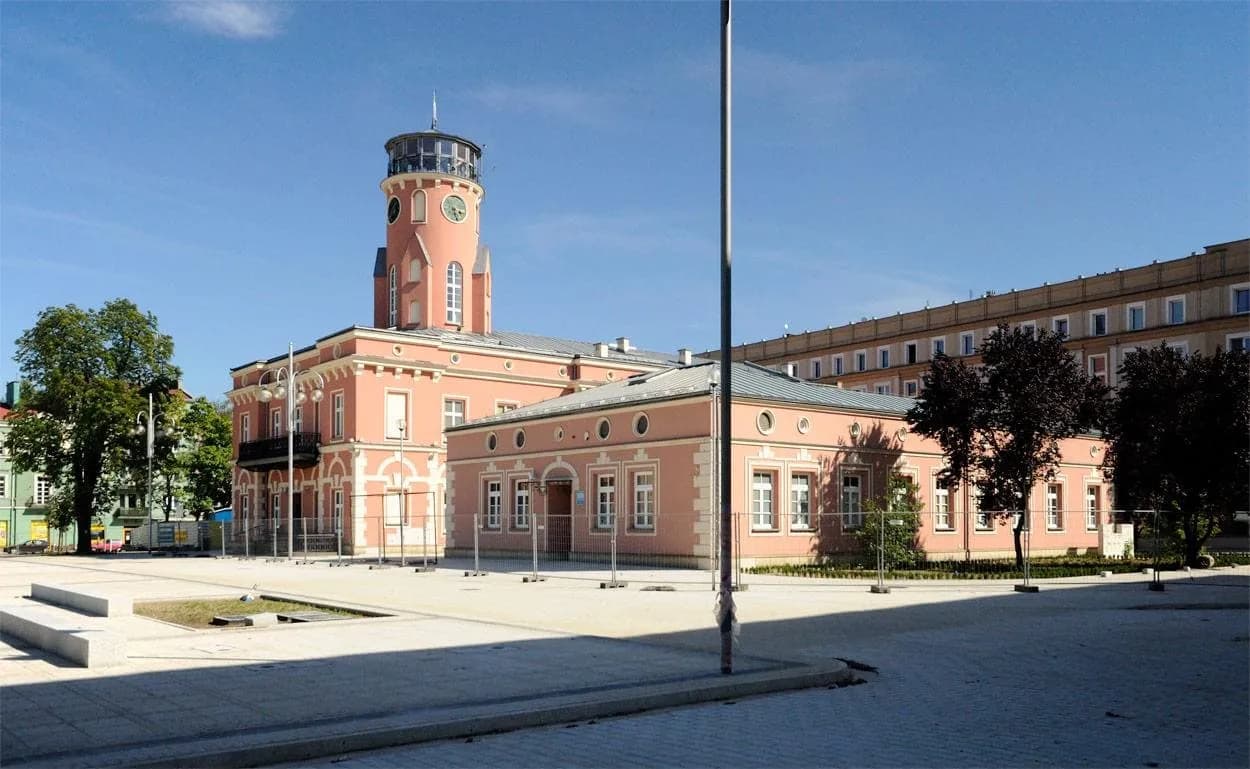
Some museums preserve a particular place or collection; in Częstochowa, the museum itself has become a framework for understanding the whole city.
For more than 120 years, the Częstochowa Museum has been collecting, protecting and interpreting the stories of the city and its surrounding region. What began in 1905 as the Hygienic Museum has developed into one of the most extensive municipal cultural institutions in the area, with a network of historic buildings and specialist sites across Częstochowa.
Its history is therefore also a story about changing ideas of what a museum should be.
The institution was established at a time when museums were increasingly being seen not only as places for displaying objects, but as centres of education and public knowledge. Its original identity as a Hygienic Museum may seem distant from its present role, but it established a tradition of connecting collections with the interests and needs of the local community.
In 1925, the institution became the Municipal Museum of Local History and Hygiene, commonly known as the Municipal Museum. It was taken over by the Regional Culture Society in 1932, and in 1936 the exhibition Regional Collections brought together natural, historical and ethnographic material that had been accumulated over the preceding years.
From a local collection to a regional institution
The Museum's development continued through the political and administrative changes of the twentieth century.
In 1959, its collections were organised into specialist sections covering archaeology, ethnography, history, and art and nature. That structure reflected a growing ambition to study Częstochowa from different perspectives, rather than treating local history as a single subject.
The administrative reforms of 1976 brought another important change. Following the creation of the Częstochowa Voivodeship, the Museum received the status of a district institution.
Its present municipal character emerged in the early 1990s. In 1993, an agreement between the Częstochowa Voivode and the city's mayor transferred the institution to the Municipality of Częstochowa as part of a pilot programme. Two years later, it adopted the name it carries today: the Częstochowa Museum.
That evolution is significant because it mirrors the broader development of the city itself. The Museum has repeatedly adapted as Częstochowa's administrative role, cultural life and understanding of its own heritage have changed.
Today, it is a municipal cultural institution of the Municipality of Częstochowa, with responsibility extending beyond simply putting objects on display. Its statutory role includes collecting, preserving, conserving and making accessible cultural and natural heritage, with particular attention to Częstochowa and its region from prehistory to the present day.
A museum spread across the city
Perhaps the clearest indication of the institution's development is its physical presence.
The Częstochowa Museum operates a network of locations rather than a single traditional museum building. Among them are the Town Hall on Biegański Square, the Old Town Hall, the Gallery of Good Art, the Exhibition Pavilion and Iron Ore Mining Museum in Staszic Park, the Archaeological Reserve, the Museum of Częstochowa Jews, and the House of Poetry, the Halina Poświatowska Museum. Its wider educational network also includes the ZODIAK Multicentre, Ethnographic Pavilion and Peasant Homestead.
Together, these sites create a particularly broad portrait of Częstochowa.
The Archaeological Reserve preserves an archaeological cemetery of the Lusatian culture in situ, allowing visitors to encounter evidence of the region's distant past in the place where it was discovered. The Iron Ore Mining Museum, meanwhile, explores an industry that formed an important part of the region's economic history.
Other locations turn towards cultural and personal history. The House of Poetry is dedicated to Halina Poświatowska, one of Częstochowa's best-known literary figures, while the Museum of Częstochowa Jews addresses the history and heritage of a community that was an important part of the city's pre-war social landscape.
The Museum's art collections provide another perspective. Its current permanent exhibition at the Gallery of Good Art, Polish Art of the 19th and 20th Centuries, places works within a wider story of Polish artistic development, while exhibitions elsewhere in the network allow the institution to move between local history, contemporary culture and specialist subjects.
A collection that continues to grow
The scale of the institution can also be measured through its collections.
At the end of 2024, the Museum recorded 61,316 museum objects, with the largest category belonging to natural history, followed by history, ethnography, archaeology and art. The institution also acquired 161 objects during 2024, through both purchases and donations.
Those figures underline an important point: a museum is not simply a collection that has been completed.
New objects continue to enter its care, while existing collections are catalogued, researched, conserved and interpreted. The Museum has also established a collection policy for 2024–2028, providing a framework for how its holdings will develop in the coming years.
That continuing work is perhaps the most important part of the Museum's institutional story. The buildings may change, exhibitions come and go, and new subjects emerge, but the underlying purpose remains consistent: to make the history and culture of Częstochowa accessible to the people who live there and to visitors seeking to understand the city.
The result is an institution that does not attempt to tell Częstochowa's story from one viewpoint. Its archaeology, nature, art, industry, literature, ethnography and social history instead form a collection of perspectives.
After more than a century, the Częstochowa Museum has consequently become something larger than the institution founded in 1905. Its many locations form a cultural map of the city, connecting prehistoric communities with industrial workers, artists with poets, and historic neighbourhoods with contemporary audiences.
That breadth is what makes the Museum an important part of Częstochowa itself: rather than placing the city's history behind one set of doors, it has spread that history across the places and subjects that continue to define the city.
Visitor Information
The Częstochowa Museum currently presents permanent and temporary exhibitions across eight principal exhibition sites: the Town Hall, Gallery of Good Art, Exhibition Pavilion, Iron Ore Mining Museum, Archaeological Reserve, Museum of Częstochowa Jews, House of Poetry and Old Town Hall.
Opening hours
Town Hall, Gallery of Good Art, Exhibition Pavilion and Iron Ore Mining Museum
Tuesday, Thursday and Friday: 09:00–15:30
Wednesday: 11:00–17:30
Saturday and Sunday: 11:00–17:00
Monday: closed
Archaeological Reserve
Thursday and Friday: 09:00–15:30
Saturday: 11:00–17:00
Monday, Tuesday, Wednesday and Sunday: closed
Thursday is a free admission day
House of Poetry – Halina Poświatowska Museum
Wednesday: 11:00–17:30
Thursday: 09:00–15:30
Saturday: 11:00–17:00
Monday, Tuesday, Friday and Sunday: closed
Museum of Częstochowa Jews
Wednesday: 11:00–17:30
Saturday: 11:00–17:00
Old Town Hall
Tuesday and Friday: 09:00–15:30
Wednesday: 11:00–17:30
Sunday: 11:00–17:00
The final admission is 30 minutes before closing. Opening hours can change for individual events and exhibitions, so visitors should check the Museum's current information before travelling.