Behind an unassuming entrance on ul. Ogrodowa stands one of Częstochowa’s most unusual pieces of industrial heritage. The Muzeum Produkcji Zapałek preserves the former match factory where generations of workers produced one of the simplest objects in everyday life: the humble match.
The factory dates back to 1881, when German entrepreneurs Julian Huch and Karol von Gehlig established the plant. Production began in 1882, making the site one of the oldest surviving industrial complexes of its kind in Poland.
Today, its old production machinery, matchbox labels, documents and other objects offer a glimpse into a manufacturing industry that has almost disappeared from everyday life.
From timber to matchbox
The factory was built during a period when Częstochowa was developing into an important industrial centre. Its railway connections helped the business, while the wider region provided access to timber and markets.
The production process was remarkably involved.
Timber was peeled and cut into thin strips before being turned into matchsticks. The sticks were treated, dried, sorted and polished, then dipped in paraffin and passed through machines where the match heads were formed. Finally, the finished matches were prepared for packaging.
Much of the historic machinery used for this work remains at the museum.
A particularly important part of the collection consists of machines manufactured by Durlach between 1926 and 1930. They were installed after a devastating factory fire in 1930 and form the heart of the preserved production line.
Standing beside the machinery gives a good sense of the scale and rhythm of factory work. This was not a small workshop making matches by hand, but a highly mechanised industrial operation.
An unavoidable part of the factory's history
A major blaze destroyed much of the plant in 1913. The event has an unusual place in Polish film history because the fire was recorded on film by the Krzemiński brothers. The footage is considered one of the earliest surviving examples of Polish documentary film.
Another serious fire struck the factory on 18 June 1930. The rebuilding that followed brought the Durlach machinery that visitors can still see today.
Black Cat and the Polish match industry
The factory became part of the Polish match industry during the interwar period.
In the 1920s, it came under the control of the Polskie Towarzystwo Przemysłu Zapałczanego SA. Following the introduction of the Polish Match Monopoly in 1925, the Częstochowa factory operated under the state-controlled system.
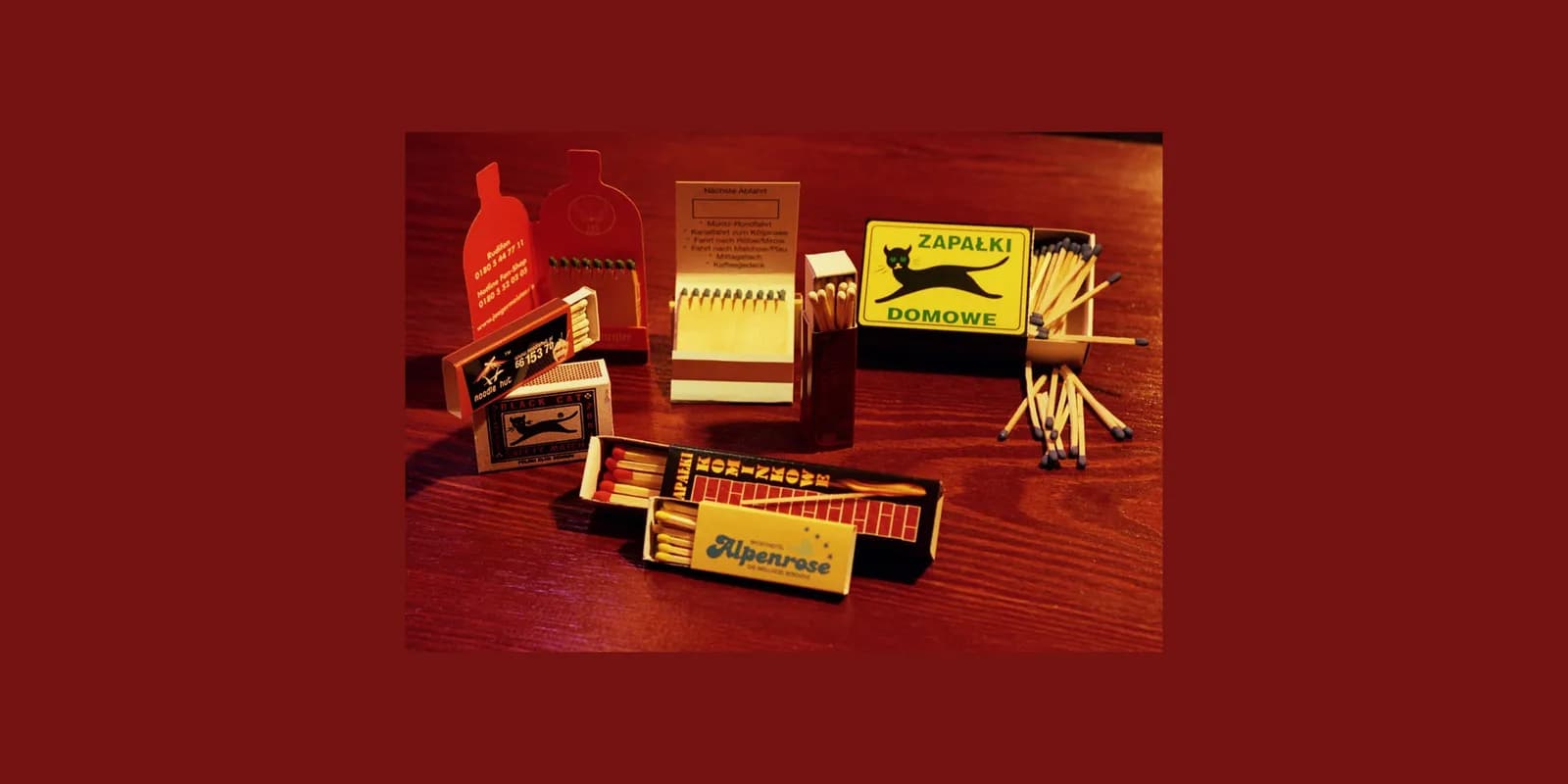
Its matches were sold under different names and in different formats, including the familiar Black Cat brand. The factory also produced specialist matches and advertising products.
Polish matches travelled well beyond the domestic market, with exports reaching markets in different parts of the world.
The colourful labels used on matchboxes have consequently become an important part of the museum's collection. For collectors and graphic design enthusiasts, they provide a small but fascinating record of changing advertising styles, illustration and popular culture.
From state factory to museum
After the Second World War, the factory was nationalised and became the Częstochowskie Zakłady Przemysłu Zapałczanego in 1951.
It continued operating through the communist period before becoming a worker-owned joint-stock company in 1997.
By then, however, the match industry was already facing growing competition and declining demand. Disposable lighters and changing household habits gradually reduced the market for traditional matches.
Production at the Częstochowa factory finally ended in 2010, closing a manufacturing story that had begun almost 130 years earlier.
The museum was established in 2002, while production was still taking place at the site.
Matchboxes, labels and tiny works of art
The machinery provides the museum's most immediate connection with the factory, but there are plenty of smaller details to discover.
The collection includes historical matchbox labels and other material connected with filumenistyka, the collecting and study of match-related objects and ephemera.
There are also unusual sculptures made from individual matches, associated with artist Anatol Karoń.
Together, these collections show how an everyday disposable product could become a subject for design, collecting and art.
A protected piece of Częstochowa’s industrial past
The factory complex and its historic machinery have been recognised for their heritage value. The site was entered into the register of historic monuments in 2010 and is included on the Szlak Zabytków Techniki Województwa Śląskiego, the Silesian Voivodeship's Industrial Monuments Route.
Its future has nevertheless been the subject of continuing discussion. Maintaining an historic industrial complex is expensive, particularly after production has stopped, and there have been various proposals concerning the site's future.
There have also been efforts to secure recognition of the factory as a Pomnik Historii, with UNESCO World Heritage recognition discussed as a longer-term ambition. These remain heritage aspirations rather than existing UNESCO status.
Visiting the Muzeum Produkcji Zapałek
The museum is located at ul. Ogrodowa 68 in Częstochowa, close to the city centre.
Opening arrangements have varied and published information is not entirely consistent, so checking directly with the museum before making a journey is advisable, particularly for weekend visits or organised groups.
For anyone interested in Częstochowa's industrial past, the museum offers something increasingly rare: an historic factory where the machinery, buildings and objects can still be considered together as one story.
The matches may have stopped being made here in 2010, but the factory still preserves the sights, sounds and technology of an industry that once formed an important part of Częstochowa's working life.
See more: Take a Seat with Częstochowa’s History
Source: lasy.gov.pl
Image credit: Przykuta, Wikimedia Commons, CC BY-SA 3.0