The Story That Draws Millions to Częstochowa
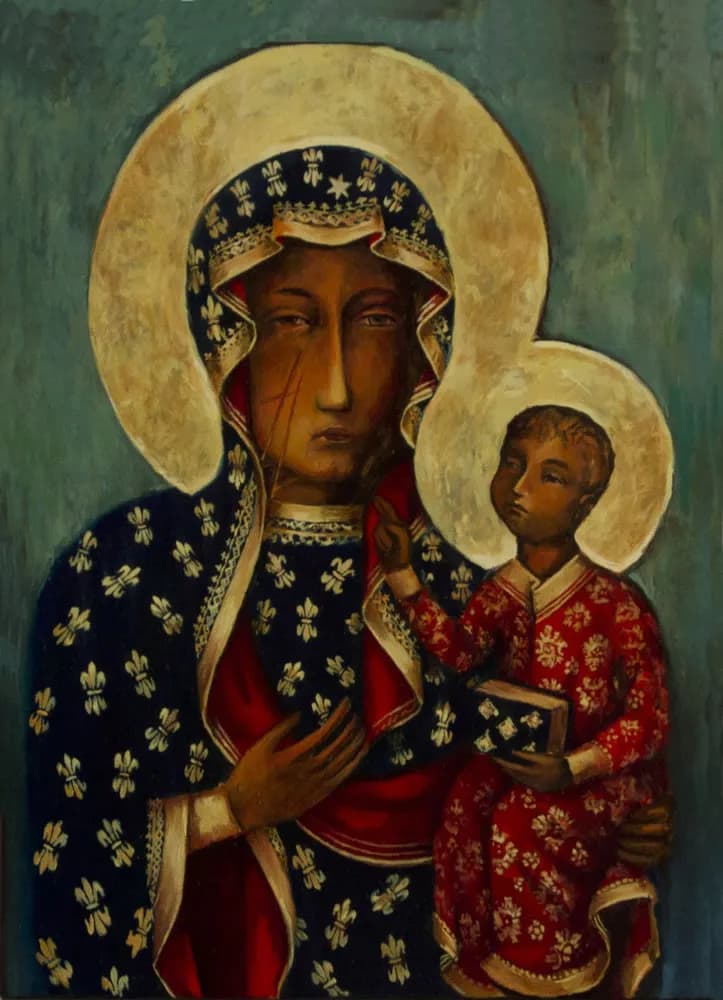
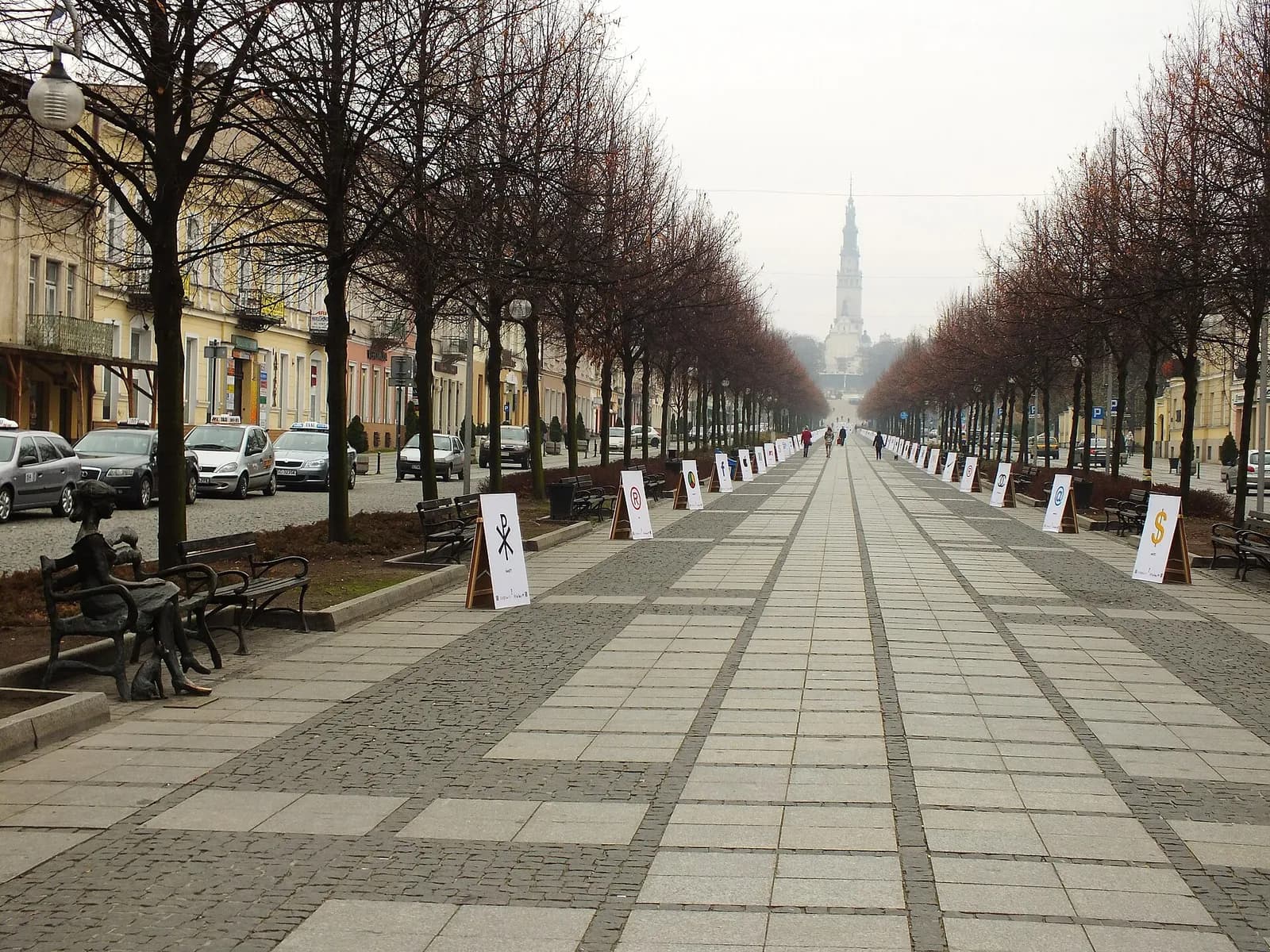
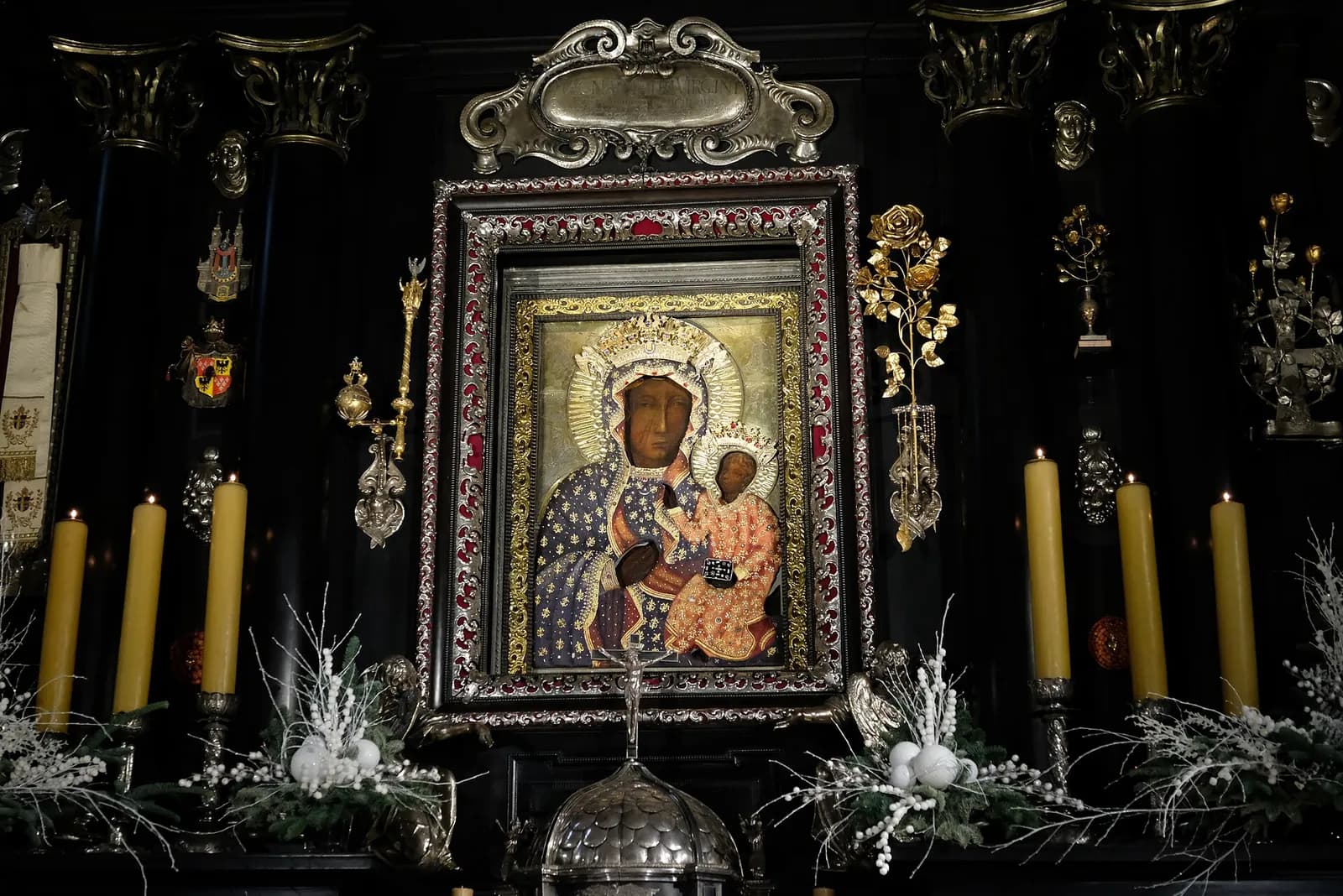
For centuries, the Black Madonna of Częstochowa has been at the heart of Poland’s religious, cultural and national identity. Housed within the Chapel of the Miraculous Image at Jasna Góra Monastery, the icon attracts millions of pilgrims and visitors from around the world every year.
For many, it is a place of prayer and devotion. For others, it is an important piece of European history and one of the most recognisable works of Christian art. While the icon is surrounded by centuries of legend, historical research provides a fascinating story of its own, revealing how faith, history and national identity have become intertwined.
Where History and Legend
Like many ancient religious treasures, the Black Madonna is accompanied by both documented history and enduring tradition.
According to Christian tradition, the icon was painted by St Luke the Evangelist on wood taken from the table of the Holy Family. It is said to have travelled from Jerusalem to Constantinople before eventually reaching Poland.
Modern historians, however, have found no evidence to support this account. Art historians generally agree that the painting is of Byzantine origin and was most likely created sometime between the 6th and 14th centuries. Its exact place and date of creation remain uncertain.
Reliable historical records place the icon at Jasna Góra from 1384, when Prince Władysław Opolczyk entrusted it to the newly established Pauline monastery.
The Mystery of the Black Madonna's Complexion
One of the most frequently asked questions concerns the icon's dark complexion.
Over the years, several explanations have been proposed. Some researchers suggest that centuries of candle smoke, ageing varnishes and oxidation of pigments gradually darkened the image. Others believe the darker complexion formed part of the original artwork.
There is no single accepted explanation, and conservation studies indicate that both the original painting and later ageing have influenced its present appearance.
It is also worth noting that the historical Mary was a Jewish woman from first-century Judea, in the Middle East. Historians broadly agree that she would most likely have had olive to medium-brown skin, dark hair and brown eyes. While the Black Madonna is not intended as a realistic portrait, its complexion is arguably closer to the likely appearance of the historical Mary than many later European depictions.
Like many Byzantine icons, however, the image was created primarily for spiritual devotion rather than historical accuracy.
The Story Behind the Famous Scars
The two scars on Mary's right cheek are among the icon's defining features.
According to tradition, the monastery was attacked by raiders in 1430, during which the icon was stolen and slashed with a sword. The attackers are said to have attempted to destroy the image before abandoning it.
Historical records confirm that the icon suffered extensive damage during the fifteenth century and underwent significant restoration. The scars were deliberately preserved, becoming a lasting symbol of suffering, endurance and hope.
The Siege That Changed Polish History
Few places hold such an important place in Polish history as Jasna Góra.
During the Swedish invasion of 1655, known as The Deluge, the monastery successfully resisted a prolonged siege despite being heavily outnumbered. The defence quickly became a powerful symbol of national resilience, and many Catholics believed the Black Madonna had protected the monastery and, by extension, the nation itself.
The following year, King John II Casimir proclaimed the Virgin Mary Queen and Protector of Poland, further strengthening the icon's place within the country's identity.
A Place of Pilgrimage
Today, Jasna Góra is one of Europe's largest pilgrimage destinations.
Each year, millions of visitors travel to Częstochowa, many completing journeys on foot that can take several days or even weeks. Pilgrims arrive from every region of Poland and the rest of the world, with the largest gatherings taking place around the Feast of Our Lady of Częstochowa on 26 August.
For believers, the shrine represents a place of prayer, thanksgiving and reflection. For visitors of all backgrounds, it offers an opportunity to experience one of Poland's most significant historic and cultural landmarks.
Faith, History and National Identity
The importance of the Black Madonna extends well beyond religion.
Throughout the partitions of Poland, the Second World War and the Communist era, the icon became a symbol of perseverance and national unity. It also held particular significance for Pope John Paul II, whose lifelong devotion to Our Lady of Częstochowa helped introduce the shrine to millions of Catholics worldwide.
Today, the image continues to represent faith, resilience and hope for many people, while also serving as one of Poland's most important cultural treasures.
What History Can Confirm and What Remains Tradition
The story of the Black Madonna combines documented historical events with centuries of religious tradition.
Historians can confidently trace the icon's presence at Jasna Góra to the late fourteenth century, confirm the damage and restoration it underwent during the fifteenth century, and document the monastery's role during the Swedish siege of 1655.
Other aspects, including the belief that St Luke painted the icon or that it was created using wood from the Holy Family's home, remain matters of faith rather than established historical fact.
Rather than diminishing its significance, this combination of history and tradition has contributed to the enduring fascination surrounding the Black Madonna of Częstochowa.
Whether viewed as a sacred icon, a masterpiece of Byzantine-inspired art or a symbol of Polish identity, it remains one of the country's most remarkable and influential cultural landmarks.
image credit: Krzysztof Kurek, CC BY 2.0