Częstochowa is one of Poland's most recognisable cities, welcoming millions of visitors each year. While it is widely known as an important place of pilgrimage, the story behind its name is far less familiar.
For centuries, historians, linguists and local storytellers have offered different explanations for the city's unusual name. One is based on medieval records and language, while the other has become one of Częstochowa's best-loved legends.
The Medieval Origins of the Name
According to linguists, the name Częstochowa originally meant 'the settlement of Częstoch'.
Częstoch was a medieval Slavic personal name, most likely belonging to the founder, landowner or an early noble associated with the settlement. The suffix -owa was commonly used in medieval Polish to indicate ownership, making Częstochowa literally mean 'Częstoch's settlement'.
Although no historical records identify the individual himself, this style of naming was common throughout medieval Poland, with many towns and villages taking their names from their founders or owners.
The personal name Częstoch is believed to be a shortened form of longer Old Slavic names such as Częstobor or Częstomir, both containing the ancient Slavic root częst-, meaning 'frequent' or 'often'.
Today, this remains the accepted explanation among historians and linguists.
The Legend That 'the City Often Hides'
Alongside the historical explanation, Częstochowa has its own well-known folk legend.
According to local tradition, the city's name comes from the Polish phrase 'często się chowa', meaning 'it often hides itself'.
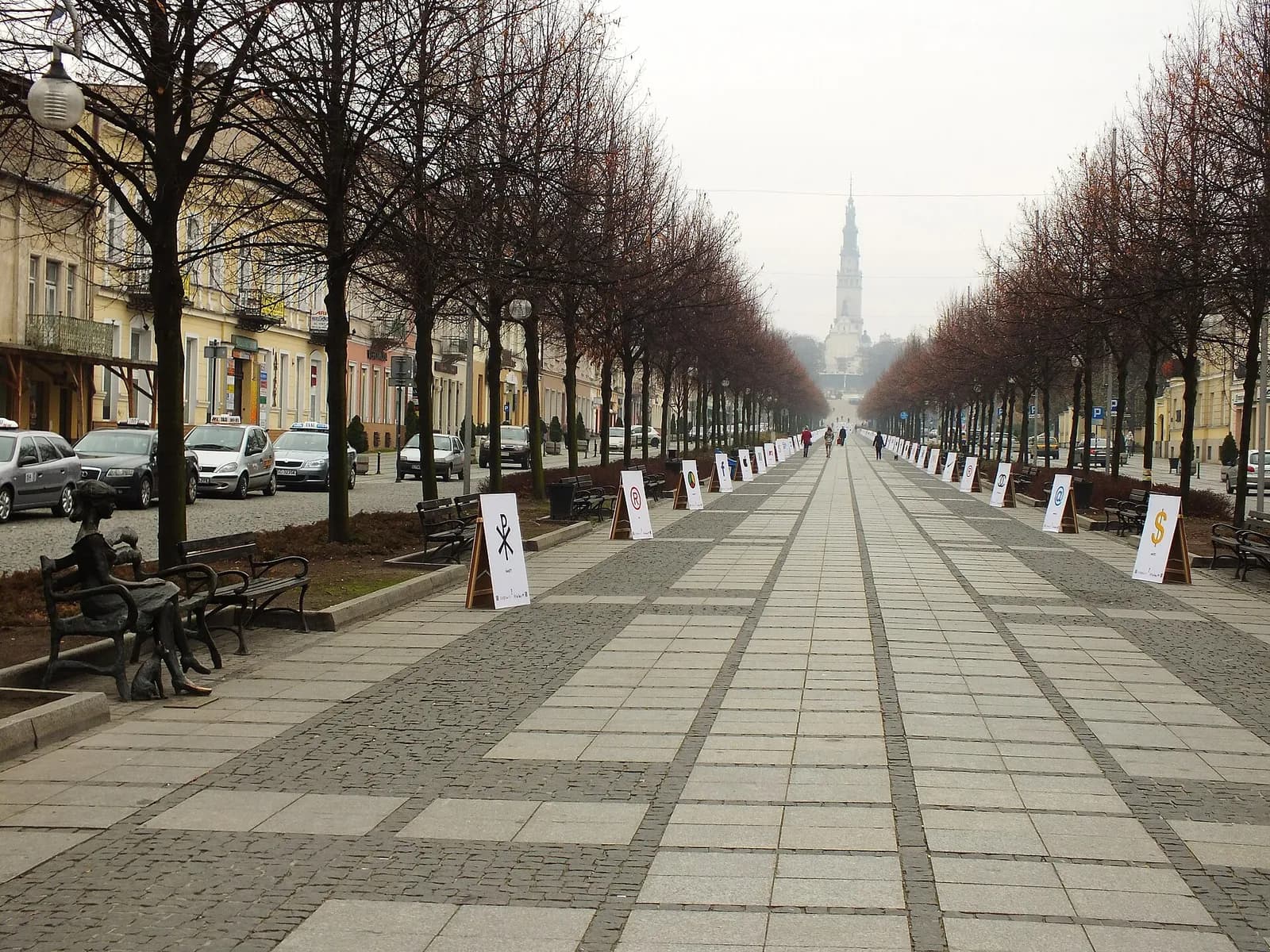
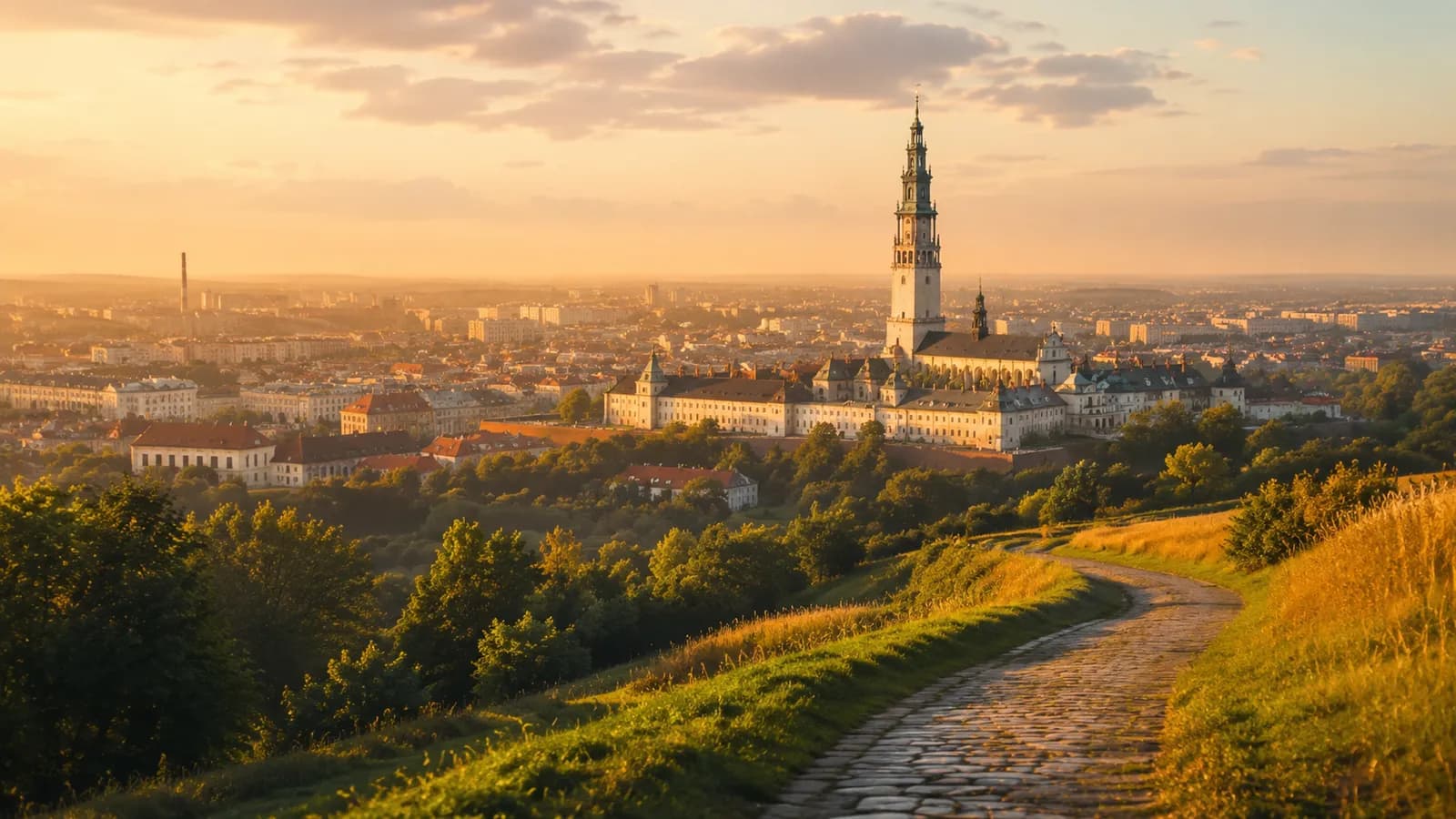
The story tells of travellers approaching the city who repeatedly lost sight of it as it disappeared behind the surrounding hills before coming back into view again. Over time, the phrase was supposedly shortened until it became Częstochowa.
It is an engaging story and remains popular with guides and visitors alike. However, linguists regard it as folk etymology, a later explanation created to fit an already existing place name rather than its true historical origin.
A City With Centuries of History
Long before it became known around the world, Częstochowa was already an established settlement.
Archaeological discoveries show that people lived in the surrounding area during the Bronze Age, while the first known written reference to the settlement dates to 1220.
The city received Magdeburg rights in 1357, allowing it to develop as an important trading and administrative centre. Its location on historic trade routes helped shape its growth over the following centuries.
One of Europe's Largest Pilgrimage Destinations
Although its name has medieval origins, Częstochowa is best known today as one of Europe's largest Catholic pilgrimage destinations.
Every year, around three to four million people visit the city, with many making the journey on foot as part of a centuries-old tradition. Throughout the summer, organised pilgrimage groups travel from towns and cities across Poland, with some covering hundreds of kilometres before arriving in Częstochowa.
This enduring tradition has made the city an internationally recognised destination, welcoming visitors from across Europe and around the world.
A Name That Has Stood the Test of Time
While the story of a city that 'often hides' continues to capture the imagination, historical evidence points to a much older origin.
Częstochowa almost certainly takes its name from an early settler or landowner named Częstoch, whose name became permanently attached to the growing settlement more than 800 years ago.
Whether visitors come to explore its history, admire its architecture or experience its unique atmosphere, they are walking through a city whose name has remained remarkably unchanged since the Middle Ages.